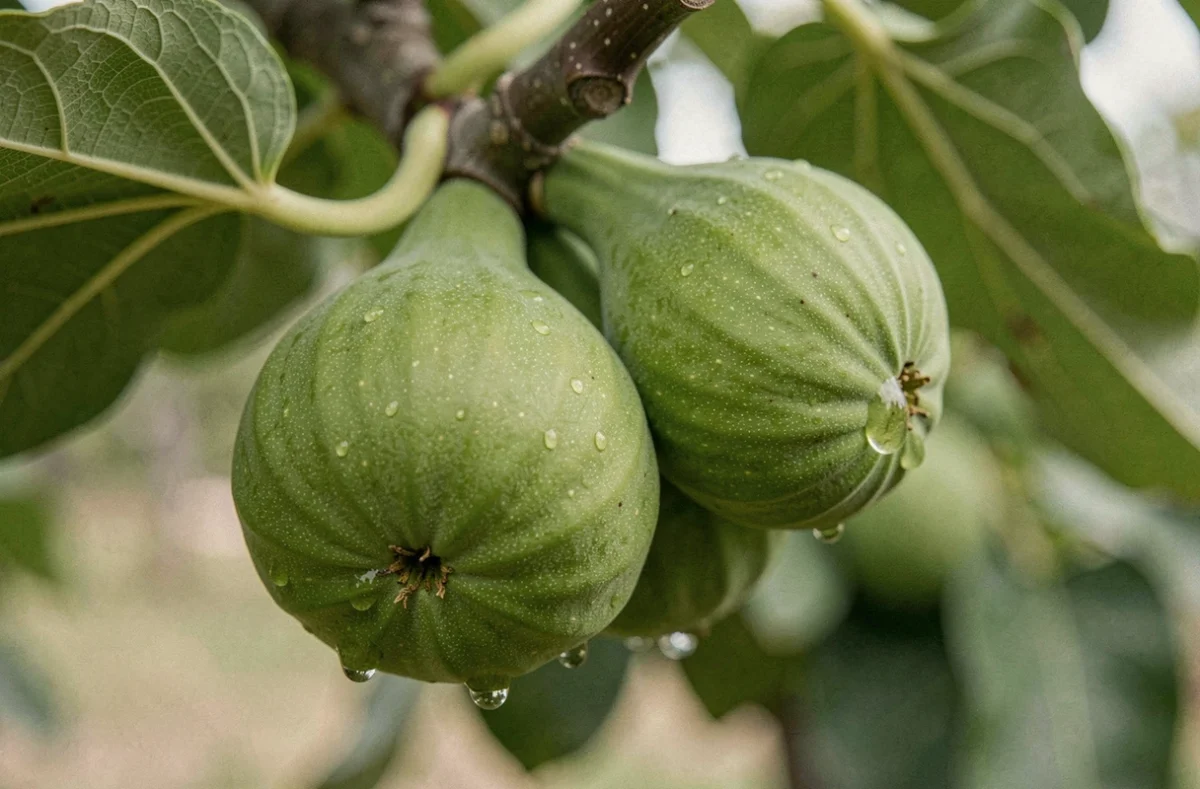
The white latex that oozes from an under-ripe fig concentrates the main health risk. This milky liquid contains ficin, a proteolytic enzyme whose activity is significantly higher in the green fruit than in the ripe fig. Understanding the exact nature of these compounds helps avoid frequent confusion between mechanical irritation and true allergy.
Ficin and fig latex: the irritating mechanism of the unripe fig
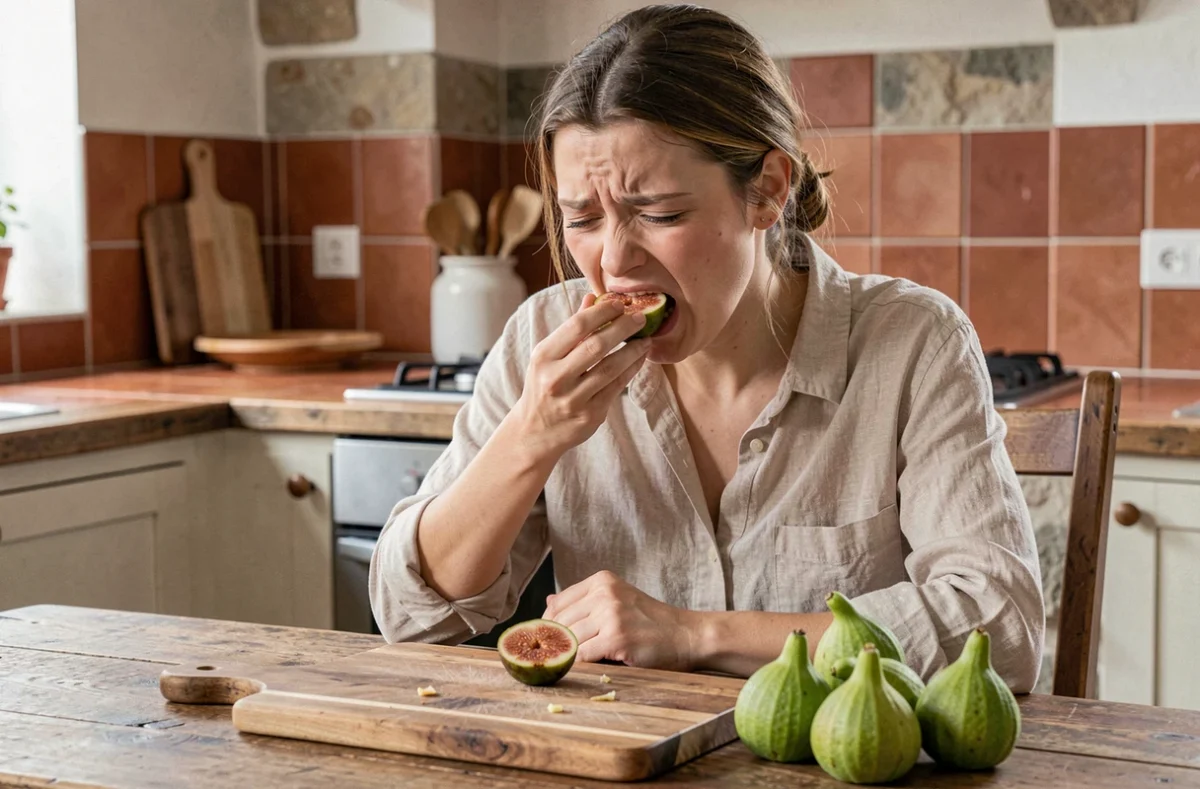
Ficin acts as a cysteine protease. Upon contact with the oral mucosa, it degrades the superficial proteins of the epithelium. The result: tingling, burning sensation, micro-lesions on the tongue and palate. These symptoms appear within minutes and usually resolve without treatment.
The latex from the fig tree is more abundant and concentrated in the green tissues. The peduncle, skin, and internal cavity of an unripe fig release more than a fully ripe fruit, where the content of ficin decreases as sugars increase.
We recommend consulting the advice from the Institut Droit & Santé which details dietary precautions regarding this type of risk associated with immature fruits.
The most common confusion is to label these oral symptoms as an allergy. Irritation from ficin does not involve the immune system. Oral allergy syndrome, on the other hand, mobilizes IgE and can be accompanied by urticaria or edema. Both situations exist with figs, but their mechanisms and severity differ radically.
Furocoumarins and phytophotodermatitis: the skin danger of fig sap
The best-documented risk concerns the skin, not the digestive tract. The latex from the fig tree contains furocoumarins, particularly psoralens. These molecules are photosensitizing: they cause no reaction in darkness but trigger a toxic reaction upon exposure to UVA.
The resulting phytophotodermatitis follows a characteristic pattern:
- Redness and burning sensation in the hours following sun exposure, on areas that came into contact with the sap
- Appearance of sometimes large blisters, comparable to second-degree burns
- Residual hyperpigmentation that may persist for several months after healing
This is not an allergy. The reaction is purely phototoxic and affects anyone exposed, without individual predisposition. Picking green figs in sunny weather combines the two risk factors: contact with latex rich in psoralens and immediate exposure to UV.
Delayed reaction and difficulty in diagnosis
An underestimated point: the skin reaction can be delayed by several hours. Contact with the sap may occur in the morning, and blisters may only appear later in the day after prolonged sun exposure. This delay makes it difficult to establish a causal link for both the patient and the practitioner.
The leaves and stems of the fig tree release the same latex. Handling branches during pruning exposes one to the same risk as picking immature fruits.
True fig allergy: oral allergy syndrome and cross-reactivity
Fig allergy exists apart from irritation from ficin. It falls under the oral allergy syndrome, a cross-reactivity between the proteins of the fruit and certain pollens. Patients allergic to ficus or birch pollen have an increased risk of reaction to fresh figs.
Symptoms are most often limited to the oropharyngeal area: lip itching, throat swelling, perioral urticaria. Severe forms remain rare but documented.
Ripe or unripe fig: does maturity change the allergic risk?
Ficin may act as a cofactor by weakening the mucosa, facilitating the penetration of allergens. An unripe fig thus combines enzymatic irritation and allergenic potential. In a ripe fruit, the reduced latex content decreases this dual exposure.
Cooking partially denatures ficin and allergenic proteins. Fig jam or poached figs present a significantly lower risk profile than raw green fruit.
Digestive disorders related to the fibers and fructose of an immature fig
Figs contain a notable amount of fiber, even in their immature form. In individuals with irritable bowel syndrome, consuming figs can exacerbate symptoms: bloating, abdominal pain, accelerated transit.
The sugar profile of an unripe fig differs from that of the ripe fruit. The fructose/glucose ratio changes during ripening. A relative excess of fructose in the green fruit can pose problems for individuals with fructose malabsorption, leading to colonic fermentation and pain.
These digestive effects are not dangerous in a toxicological sense, but they make the green fig particularly poorly tolerated in sensitive individuals. The digestive risk is functional, not lesion-based, which clearly distinguishes it from skin damage caused by furocoumarins.
Recognizing a fig that is ripe enough for safe consumption
Several reliable criteria can help assess the ripeness of a fig before consumption:
- The skin yields slightly under thumb pressure without being soft or cracked
- The peduncle no longer releases visible white latex upon breaking
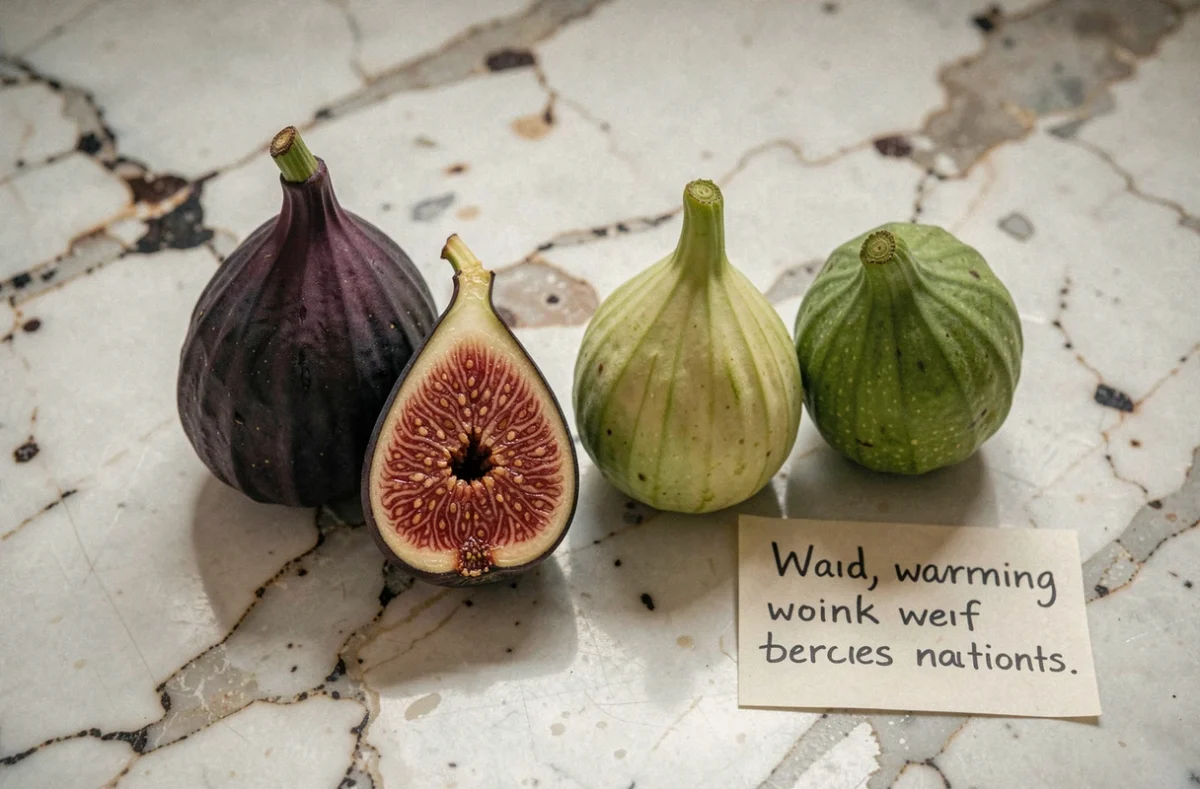
- The color has shifted from bright green to the characteristic hue of the variety (purple, brown, or golden yellow)
- The fruit emits a perceptible sweet fragrance without needing to be brought close to the nose
The absence of latex at the peduncle remains the most reliable marker. If a white liquid beads at the break, the fruit has not reached the stage of ripeness that reduces the concentration of ficin and furocoumarins.
The majority of reported incidents involve figs picked prematurely from the tree, not fruits purchased through conventional distribution channels where harvesting occurs at a more advanced stage of ripeness. Amateur picking remains the primary context of exposure, both for the ingestion of green fruits and for skin contact with the sap during branch handling.