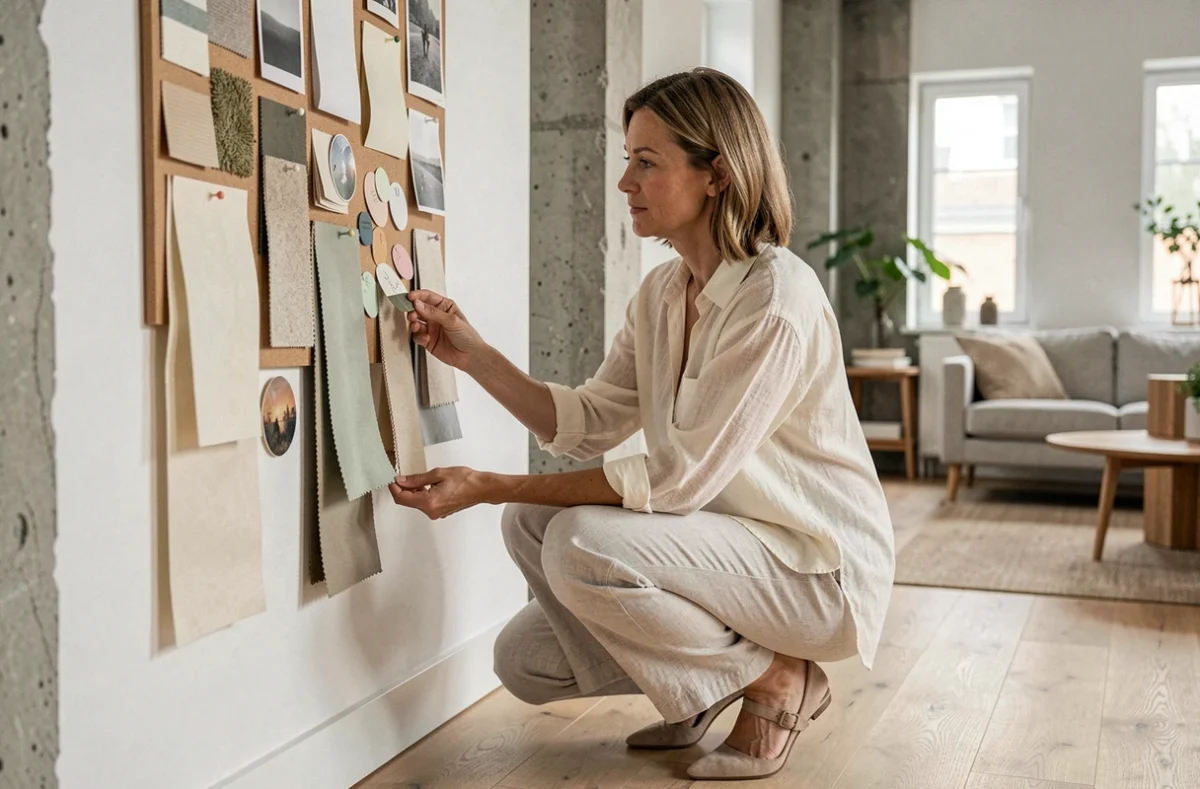
Summer comfort has become a key design criterion in home projects launched this year. The orientation of the building, the choice of materials with high thermal inertia, and natural ventilation now take precedence over solely addressing winter insulation. This shift redefines the order of priorities for any construction or renovation project.
Thermal inertia and summer comfort: the technical aspect that home projects underestimate
We observe a persistent gap between the performance promised on paper and the actual summer experience of the occupants. A well-insulated wall lacking sufficient thermal mass stores daytime heat without properly releasing it at night. The result: indoor temperatures that exceed comfort thresholds as soon as the first hot days arrive.
External solar protections (adjustable sunshades, projecting shutters, bioclimatic pergolas) form the first line of defense. Their effectiveness far exceeds that of an interior blind, which allows radiation to enter before attempting to block it.
The greening of the surroundings plays a measurable complementary role: a well-positioned deciduous tree reduces solar gain in summer without compromising passive gains in winter. Coupling these devices with calculated cross-ventilation from the planning phase helps avoid the systematic use of air conditioning.
For those wishing to compare these technical solutions with market offers, discovering the Salon de la Maison website provides access to a concrete overview of professionals and products.

MaPrimeRénov’ after the September 2026 realignment: adapting the renovation strategy
Decree No. 2026-822 of August 25, 2026, has profoundly modified the scope of aid. Since September 1, 2026, individuals must increasingly frame their work within a comprehensive renovation rather than isolated actions. Air/water heat pumps, geothermal systems, and connections to a heat network remain supported, but the administrative framework requires rethinking the sequencing of the project.
In practical terms, the aid calendar now conditions the appropriate order of work. Starting attic insulation before replacing the heating system, or vice versa, no longer has the same financial impact depending on the chosen renovation path.
Progressive renovation or comprehensive renovation
Step-by-step renovation remains possible, but it loses financial advantage compared to a comprehensive project. We recommend simulating both scenarios before any commitment, incorporating the following constraints:
- The amount of aid varies depending on whether the work is grouped into a single file or spread over several years.
- The choice of RGE provider must be finalized before submission, as changing contractors mid-course can invalidate the file.
This administrative constraint transforms the design phase into a budgeting exercise as much as a technical one.
Biosourced materials in home projects: beyond the decor trend
Wood, hemp fiber, cellulose wadding, or wood wool are no longer limited to an aesthetic “natural” positioning. Manufacturers now integrate them into complete construction systems, validated for their performance in hygrothermal comfort and limitation of volatile organic compounds.
Wood is gaining ground in new builds, extensions, and elevations. Its structural lightness allows interventions on existing foundations where concrete would require costly reinforcement. In renovations, biosourced rigid fiber panels are gradually replacing expanded polystyrene in external insulation, with a significantly more favorable carbon footprint over the life cycle.
Selection criteria for a sustainable project
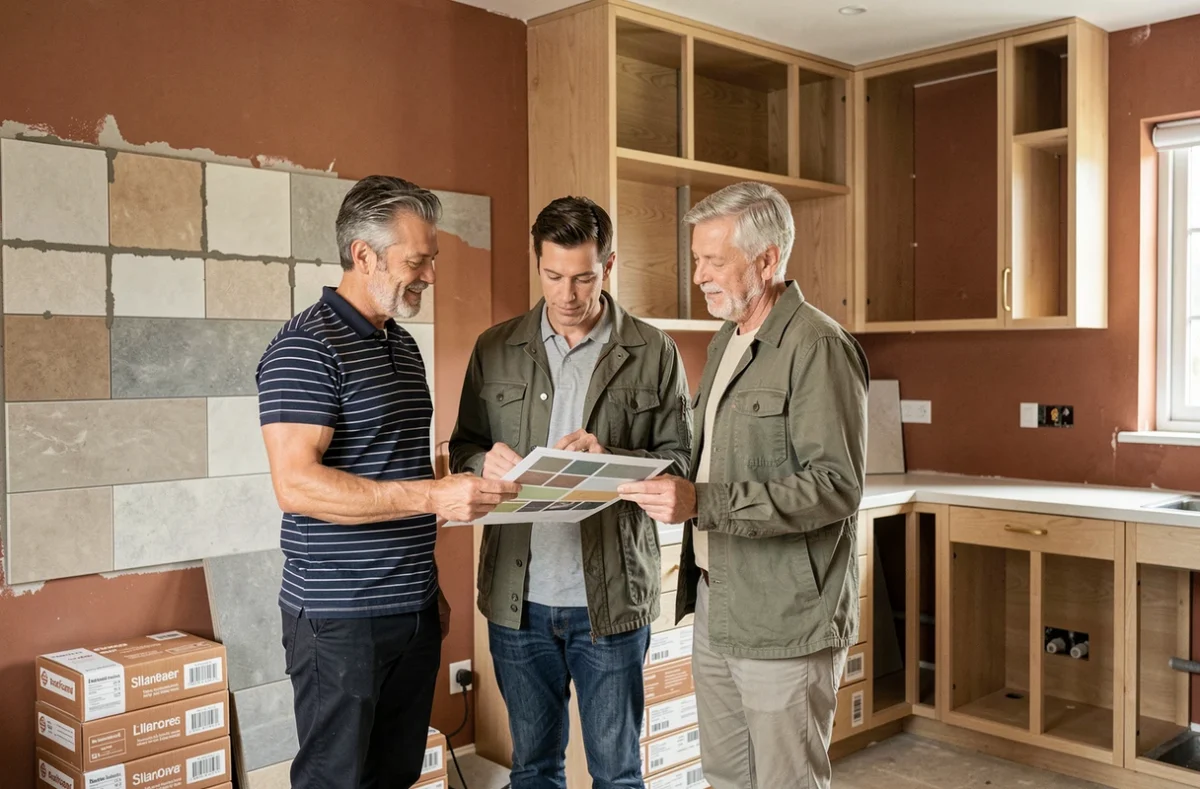
The choice of a biosourced material is not limited to its composition. Three technical parameters deserve particular attention:
- The thermal phase shift, which measures the time taken by heat to pass through the wall. A high phase shift provides better protection in summer.
- The permeability to water vapor, crucial for preventing moisture-related issues in old stone or earth walls.
- The local availability of the material, which influences both transport costs and supply responsiveness in case of additional orders.
Interior decor trends: what is really changing in renovation choices
Color palettes are evolving towards low-reflectance shades (terracotta, deep green, rich beige) that absorb light instead of reflecting it harshly. This choice is not only aesthetic: a matte and dark shade on a wall with high inertia contributes to visual comfort by reducing glare in highly glazed rooms.
Modular spaces confirm their place in construction and interior renovation projects. Sliding partitions, retractable mezzanines, and built-in furniture allow for changing the configuration of a room without heavy intervention. The challenge for the project owner is to anticipate technical reservations (rails, structural reinforcements, relocated outlets) from the outset.
Indirect lighting integrated into the architecture (light grooves, backlit niches) is gradually replacing central pendants. This approach requires a detailed electrical plan validated before the installation of drywall, or else costly modifications may be necessary.
A successful home project this year relies less on the choice of an isolated decor trend and more on the coherence between thermal envelope, aid strategy, and interior finishes. The technical decisions made during the design phase condition the actual comfort for years to come, well beyond the immediate visual effect.