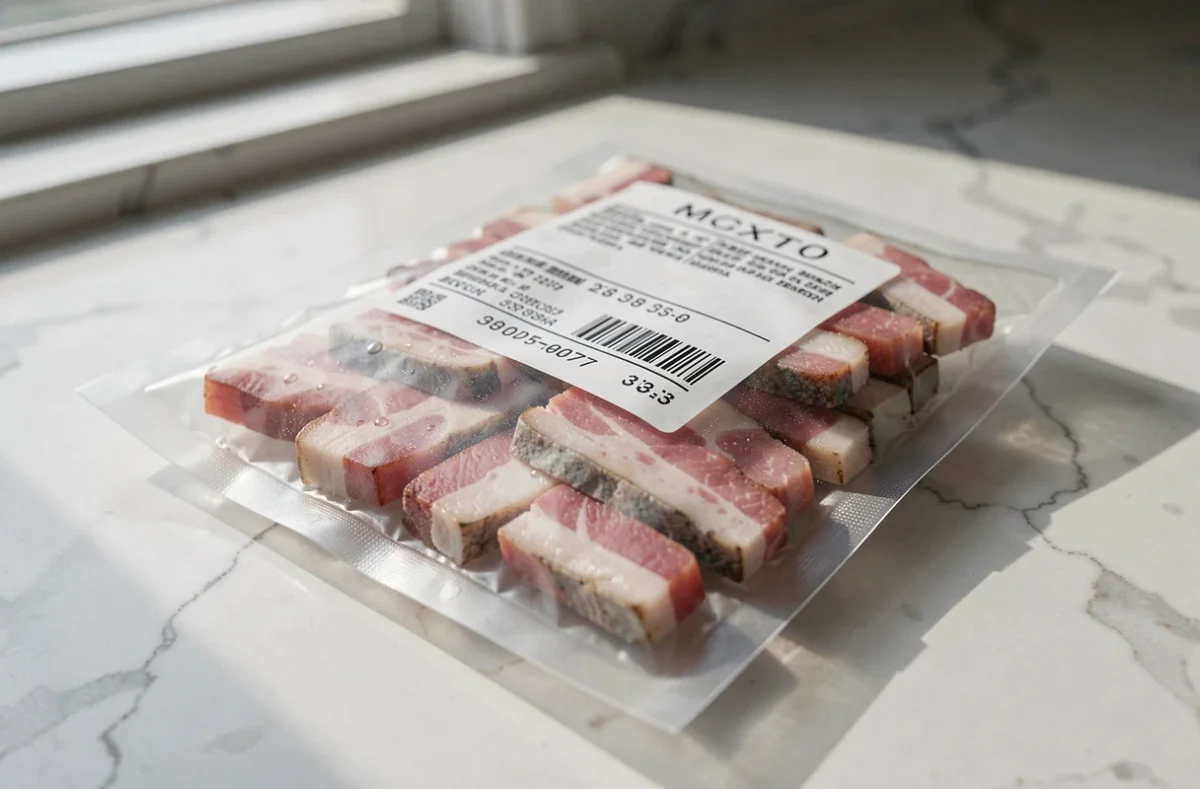
A pack of bacon lardons found at the back of the fridge, a few days past its date: should you throw it away immediately, or can you still use it? The answer depends on the type of date printed on the packaging, the product’s actual condition, and how it has been stored. Looking at any one of these factors in isolation can be misleading.
Expired bacon lardons: checklist of what to look for
Before opening the pack and after opening it, several indicators can help you assess the situation. The table below lists what to check, how reliable each indicator is, and what it means in practice.
| Criterion | What to look for | Reliability on its own | Conclusion if there is a problem |
|---|---|---|---|
| Date on the packaging | “Use by” date | High (food safety limit) | Past the use-by date, there is a microbiological risk even if there are no visible signs |
| Packaging integrity | Pack is swollen, film is punctured, vacuum seal is broken | High | Compromised packaging = throw it away without further checks |
| Smell | Sour, acidic, putrid, or simply unusual | Medium (does not detect all bacteria) | Unusual smell = do not eat |
| Colour | Greyish, greenish, or dull rather than pink | Medium | Marked colour change = likely spoilage |
| Texture | Surface is slimy, sticky, or unusually dry | Medium | Slime on the surface = bacterial growth |
| Cold chain | Pack left out of the fridge, refrigerator temperature | Critical but invisible | Break in the cold chain = no other criterion can make up for it |
The key takeaway from this table: no sensory check alone can guarantee that the product is safe. Lardons that look and smell normal may still contain pathogenic bacteria that cannot be detected without laboratory testing. The date and storage conditions remain the two main factors in deciding whether to eat them.
For more information, this detailed guide explains how to tell whether bacon lardons are still safe to eat by looking at these different signs together.
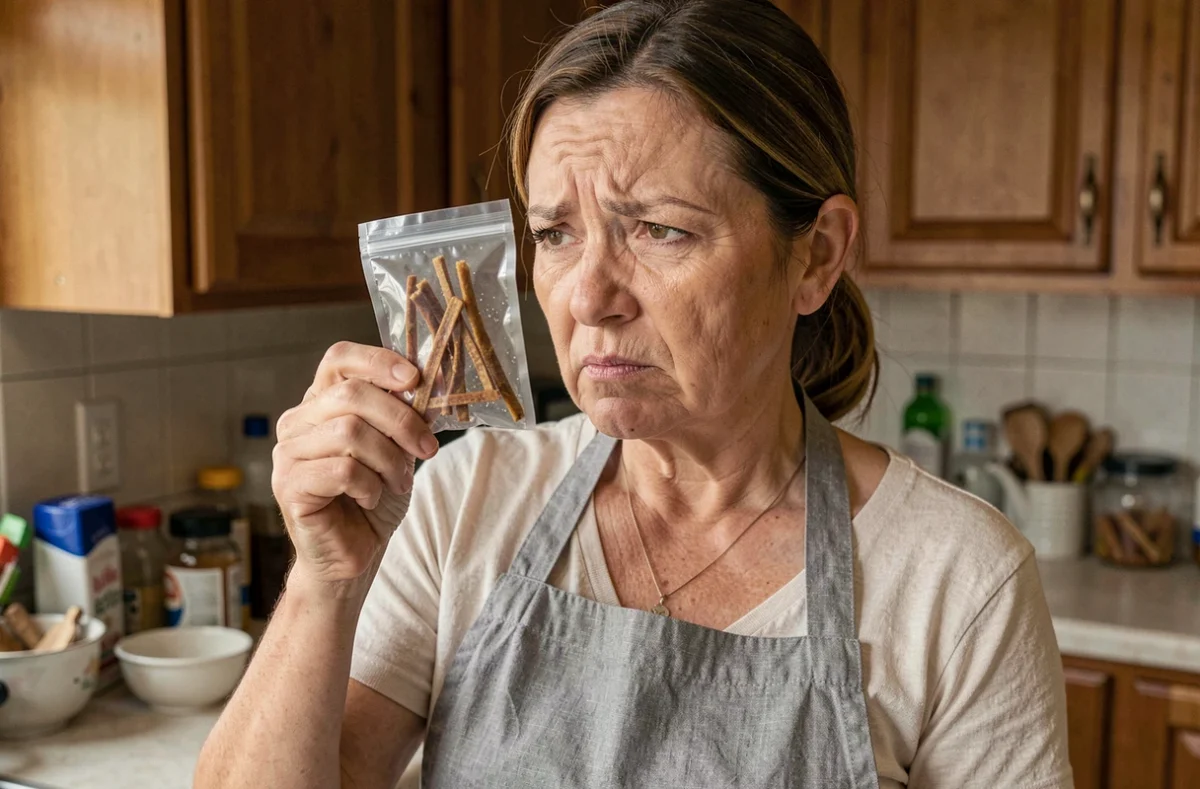
Use-by date on bacon lardons: what it really means
Bacon lardons carry a use-by date, identified by the wording “use by”. This date sets a food safety limit, not just a quality recommendation. It is fundamentally different from a best-before date, which applies to dry or sterilised products such as pasta or canned food.
Manufacturers set the use-by date based on microbiological tests that measure bacterial growth under normal refrigeration conditions. The result includes a safety margin, but that margin assumes the product is kept continuously between 0 and 4 °C.
Why there is almost no leeway after the use-by date
With plain yoghurt—an acidic product that is less hospitable to bacteria—eating it a few days past its date poses a limited risk. Bacon lardons are different: raw or lightly processed cured meat is rich in protein and water, creating favourable conditions for pathogens such as Listeria or Salmonella to multiply.
A pack of bacon lardons past its use-by date does not get the same leeway as yoghurt or hard cheese. Comparing it with other fresh foods is misleading. This comparison often comes up in discussions about food waste, even though the level of risk is not at all comparable.
Cold chain and packaging: factors people underestimate
Checking a product’s appearance and smell can reveal spoilage, but not contamination. The distinction between the two is rarely explained.
- Spoilage (changes in smell, colour, or texture) is caused by bacteria breaking down the product. Not all of these bacteria are dangerous, but they indicate conditions that may also favour the growth of other pathogenic microorganisms.
- Contamination by pathogenic bacteria (Listeria monocytogenes, Salmonella, Clostridium botulinum) can occur without any visible or noticeable signs. Contaminated lardons may look and smell completely normal.
- A break in the cold chain speeds up both processes. A pack of bacon lardons left on a worktop for an hour in summer will have warmed up; putting it back in the fridge does not undo this. Bacteria that have multiplied do not disappear when the product cools down.
Swollen packaging is the most reliable warning sign apart from the date itself. Swelling indicates that active bacteria inside the pack are producing gas. In this case, the date is no longer the main concern: throw the product away.
A vacuum-sealed pack with film still tightly pressed against the lardons, stored in a refrigerator set below 4 °C, offers better protection. But “better protection” does not mean “an absolute guarantee” once the use-by date has passed.
Cooking expired bacon lardons: a false sense of security
The idea of cooking questionable bacon lardons thoroughly to eliminate the risk comes up often. Heat does destroy some bacteria, but it does not neutralise all the toxins they may have already produced. Some bacterial toxins can withstand high temperatures and remain active even after prolonged cooking.
Cooking cannot make a product safe again if its microbiological safety has been compromised. This instinct can lead people to underestimate the real risk and delay throwing away a product that should have been discarded as soon as the pack was opened.
Symptoms if something goes wrong
Food poisoning caused by contaminated cured meat usually develops within hours or days of eating it. The most common symptoms include:
- Nausea, vomiting, and diarrhoea, often starting within 6 to 72 hours
- Fever and abdominal pain, sometimes mistaken for ordinary gastroenteritis
- In severe cases (particularly listeriosis), neurological symptoms that require prompt medical attention, especially in pregnant women, older adults, and people with weakened immune systems
If you are concerned after eating the product, the safest course of action is to consult a doctor and tell them what you ate and how long ago.

The question of expired bacon lardons comes down to a simple trade-off: the cost of throwing away a pack is always lower than the risk of food poisoning. An expired date, suspicious packaging, or uncertain storage conditions—any one of these three is enough to make the decision.