
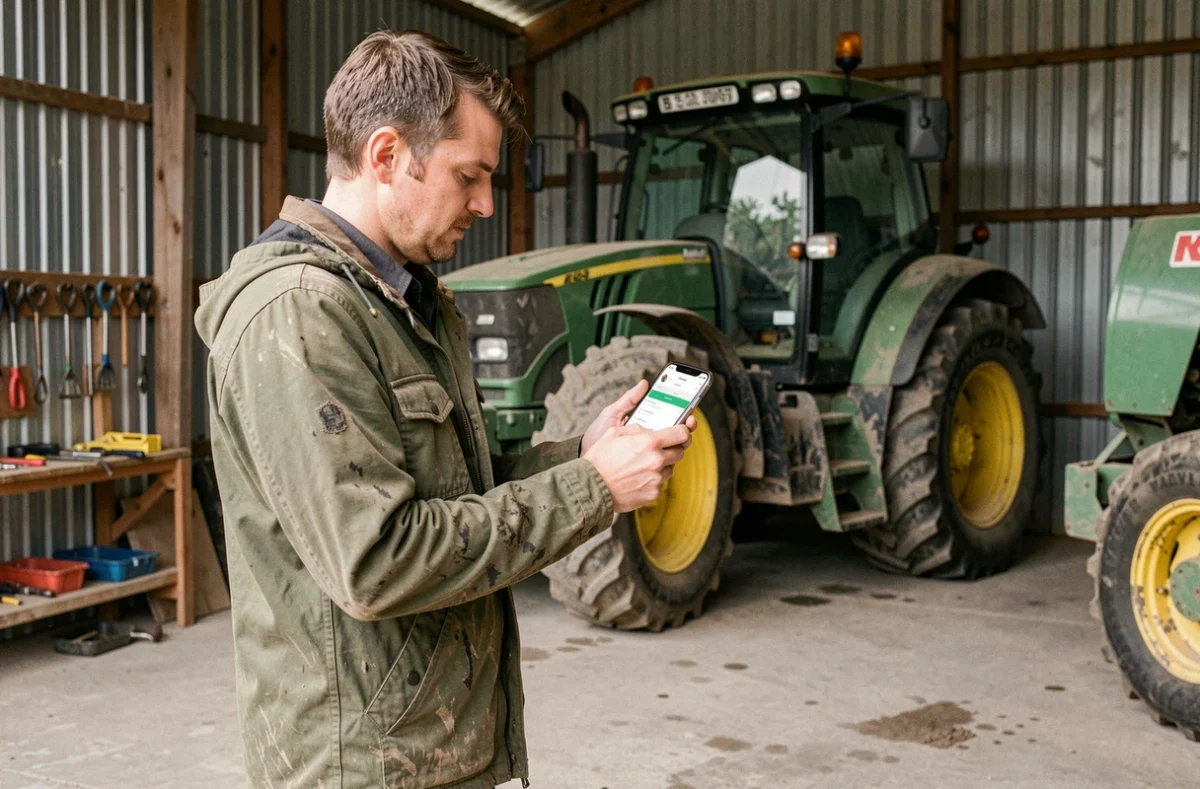
When ordering seeds or sprayer parts from the farmyard, between two jobs, the reflex is often to go as quickly as possible: first result, cart, validation. The problem is that this speed can be costly over a complete campaign. Optimizing online agricultural purchases is not just about comparing two displayed prices. It is necessary to integrate technical compatibility with existing equipment, contractual conditions, and supplier reliability.
Compatibility of inputs with precision agriculture equipment
This point is rarely discussed in traditional buying guides, yet this is where mistakes can be the most expensive. In the plant sectors, about three-quarters of precision agriculture equipment is used to modulate the application of inputs on the fields.
Before validating an online order for fertilizers or phytosanitary products, checking compatibility with your modulation maps avoids unnecessary back-and-forths. A product whose granulation or formulation does not match the settings of your spreader renders modulation ineffective.
Specifically, one can cross-reference the product’s technical data sheets with the specifications from the spreader or sprayer manufacturer. Several specialized platforms, such as www.agrisystems.net, centralize this information and allow filtering references by type of equipment.
If you work with recommendation maps from a decision support tool (OAD), note the minimum and maximum dose accepted by your equipment. Comparing a price per liter without this verification is akin to buying blindly.
Contractual conditions and payment terms: what the displayed price does not reveal
The French framework now mandates written contracts for agricultural transactions, with automatic revision mechanisms based on production costs and strict regulation of payment terms. These rules, strengthened in recent years, change how one must read an online offer.
A catalog price does not reflect the actual cost of an agricultural purchase. Two suppliers may display the same price for a nitrogen fertilizer but offer very different payment conditions: one at 30 days, the other at 60 days end of month. For a farm managing its cash flow quarterly, this difference is significant.
Points to check before comparing two offers
- The actual payment term and the penalties for late payment stipulated in the contract, which must be included in the general sales conditions accessible from the platform
- The price revision clause: some contracts index the price to a production cost indicator, protecting against sudden increases during the campaign
- The actual delivery costs, including surcharges for delivery to isolated farms, often hidden until the cart is validated
On this last point, feedback varies by platform. Some include delivery in the price, while others charge by the kilometer beyond a threshold. Requesting a transport quote before comparing remains the most reliable method.
Group purchases between farms: reducing costs on inputs and equipment
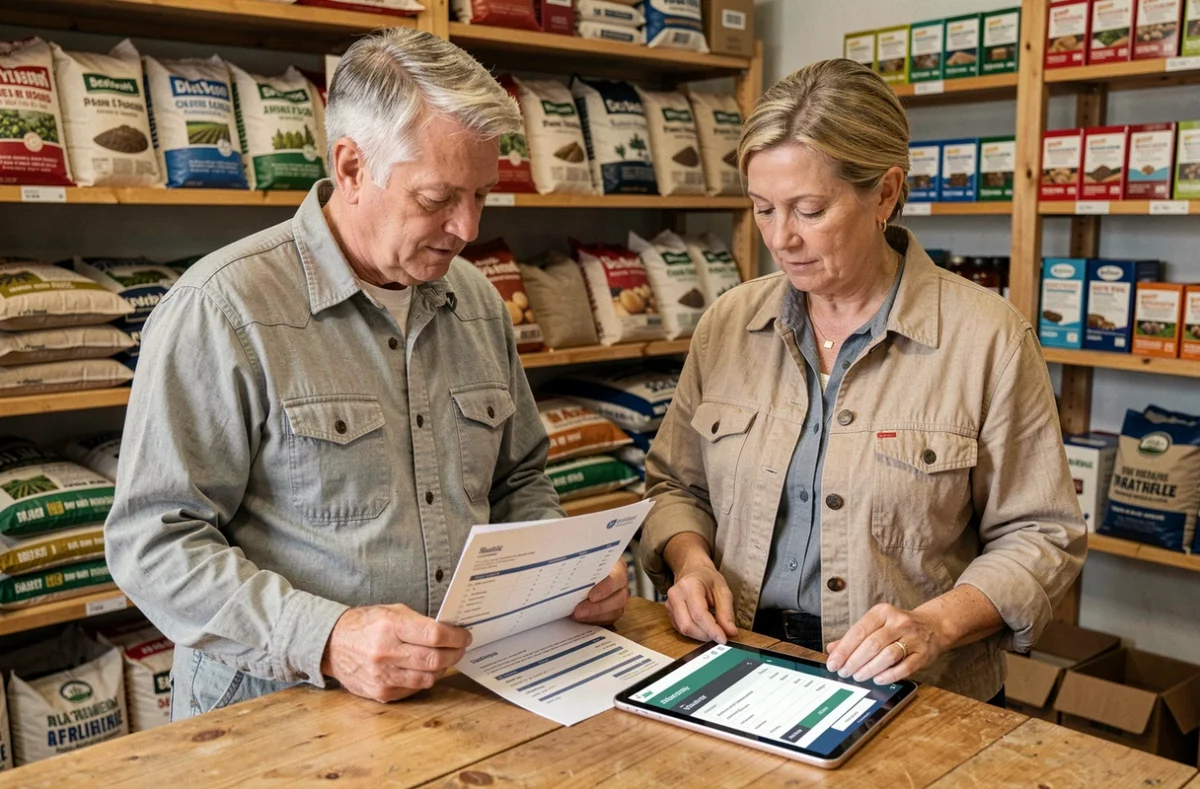
Group purchasing is not new in the agricultural world, but online platforms give it a new dimension. Consolidating orders from several neighboring farms into one cart allows triggering volume discount thresholds that no one would reach alone.
Pooling an input order between three or four farms also reduces the unit transport cost. This is particularly relevant for heavy products like calcium amendments or base fertilizers.
To organize these group purchases online, one can rely on simple tools:
- A shared spreadsheet listing the needs of each farm, product references, and quantities, updated before each seasonal order
- A single point of contact who places the order and checks compliance upon receipt, to avoid duplicates and disputes
- A ordering calendar aligned with supplier discount windows, often concentrated at the beginning of the campaign
This organization requires a minimum of coordination, but the savings over a complete campaign are tangible, especially on fertilizer and phytosanitary costs that weigh heavily on operational expenses.
Reliability of online suppliers: concrete selection criteria
With the proliferation of platforms, differentiating a reliable supplier from an opaque intermediary requires some method. The first check concerns legal identification: SIRET number, physical address, mention of approval for the distribution of phytopharmaceutical products if applicable.
Next, look at the quality of the technical data sheets. A serious supplier publishes safety data sheets, certificates of compliance, and registration numbers directly on the product page. If these documents are missing, it is better to look elsewhere.
Return management and after-sales service
For agricultural equipment ordered online (spare parts, milking equipment, electronic components for precision agriculture), the return policy is a decisive selection criterion. Check the withdrawal period and the conditions for handling returns before validating. Some platforms charge the customer for returns, which negates the benefit of an attractive price if the part is unsuitable.
Real-time order tracking, with notifications at each logistical step, has become a standard. Its absence generally indicates a level of service below expectations for professional use where delivery times condition the work schedule.
In 2024, the vast majority of farmers used the Internet daily in their professional activities, to track prices, order inputs, or manage their farms. This widespread usage makes it all the more necessary to take a critical look at offers. The best online purchase remains the one that has been prepared offline, with modulation maps and contractual conditions in hand, even before opening a browser.