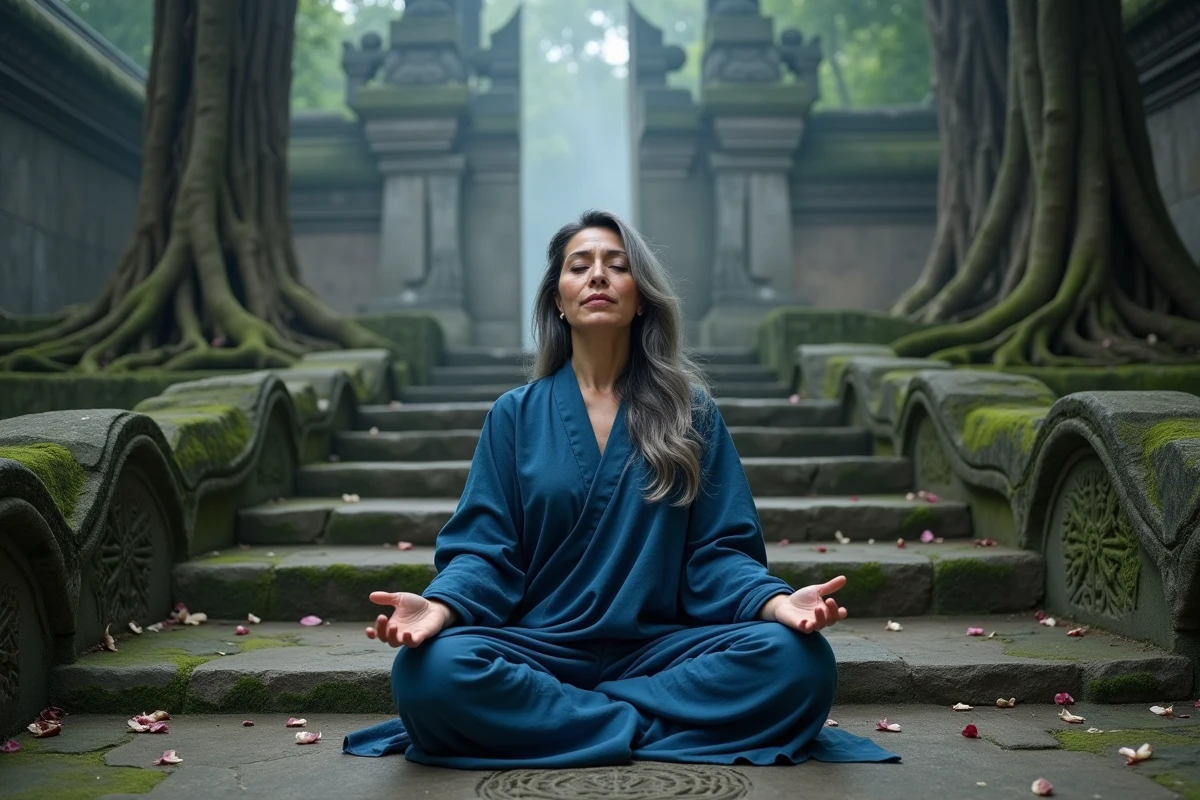
Each major religious tradition carves the invisible in its own way. Buddhism distinguishes three realms of existence (desire, form, formless), Hinduism superimposes planes ranging from the underworld to heaven, and Jainism offers yet another classification. Speaking of seven spiritual worlds, therefore, is to choose a framework among several, not to apply a singular truth.
Spiritual Worlds: Inner States, Not a Geography of the Beyond
Have you ever felt such a strong mood change that it seemed to alter your perception of the entire world? This is exactly the idea behind the spiritual worlds in several traditions. These planes do not refer to physical places located somewhere in the cosmos.
In Buddhism, the realms represent physical, emotional, and mental dimensions of existence. The realm of desire, for example, corresponds to a state where attachment to sensory pleasures dominates consciousness. The realm of form describes a level where the mind stabilizes but remains tied to subtle perceptions. The realm of formlessness refers to a consciousness almost entirely detached from any material support.
Transposed to the framework of the seven worlds, each plane becomes a mirror of a psychological state. The first world may reflect raw survival, while the last represents a form of spiritual clarity. The goal is not to “travel” from one world to another as one would change countries, but to transform one’s relationship with suffering and attachment. Those who wish to explore the 7 spiritual worlds benefit from approaching these planes from this inner perspective rather than as a mapping of the invisible.
Seven Stages of Mystical Life According to Christian Tradition
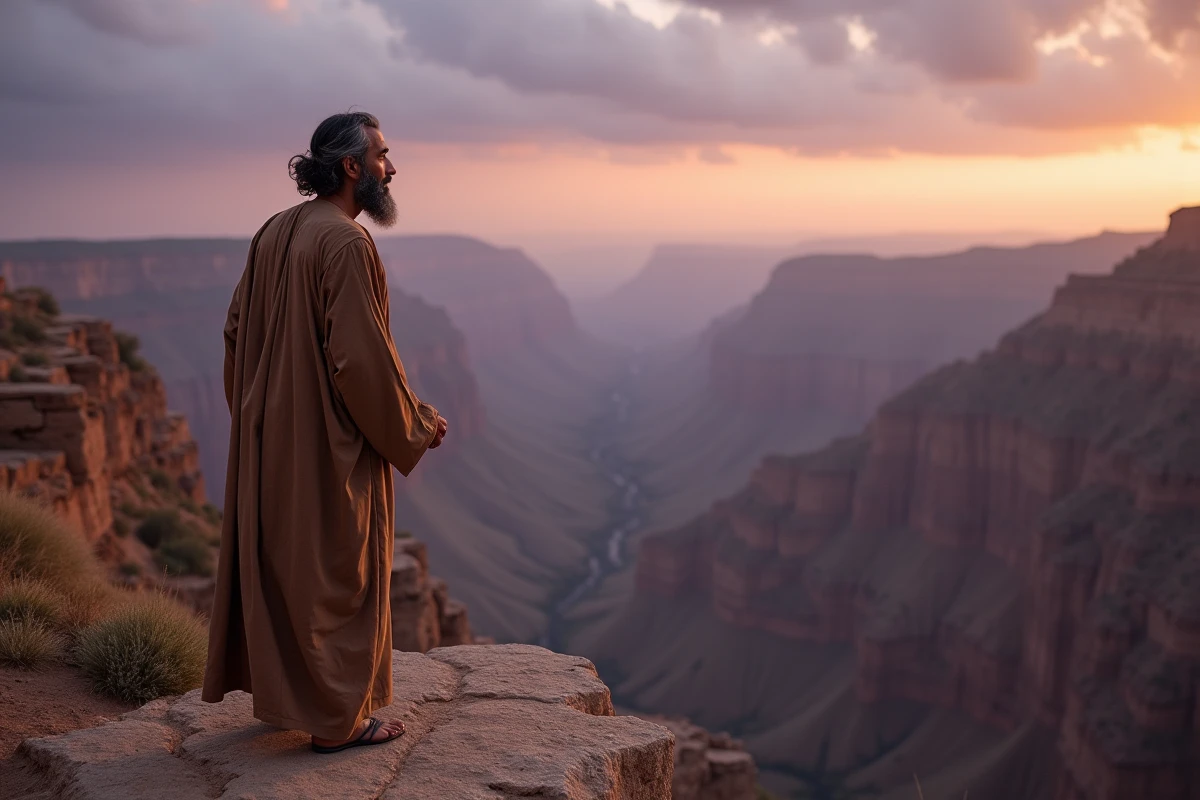
Teresa of Avila, a Spanish Carmelite, described the spiritual life as an inner castle composed of seven dwellings. Each dwelling corresponds to a stage of transformation. One moves from the hesitant prayer of the beginner to an intimate union with the divine.
This model provides a different perspective from the lists of symbols typically found. It is a progressive path of inner transformation, not an inventory of sacred objects. The first dwellings describe a consciousness still turned outward, distracted by everyday concerns. The intermediate dwellings mark the emergence of inner struggles, doubts, and phases of spiritual dryness.
The last dwellings correspond to states where personal will gradually fades. The practitioner no longer seeks to obtain something from prayer. They experience a form of continuous presence, even amidst ordinary tasks.
Why the Number Seven Recurs in So Many Traditions
The recurrence of seven is not merely coincidental. It appears in the seven days of the week, the seven colors of the rainbow, the seven notes of the diatonic scale, the seven branches of the Hebrew Menorah, and the seven circumambulations of Mecca. In symbolism, seven represents a completed cycle, a point of arrival after a full progression.
In numerology, seven is often associated with the union of matter and spirit. Three (trinity, triangle, spirit) added to four (square, elements, matter) gives seven. This interpretation crosses cultures:
- In Christianity, the seven days of Creation mark the fulfillment of the visible and invisible world
- In Hinduism, the seven chakras mark an energetic journey from the base of the spine to the crown of the head
- In Islam, the seven ritual circuits around the Kaaba symbolize total devotion
Meaning of the Seven Worlds and Daily Practice
Understanding these planes is not merely an intellectual exercise. Each world corresponds to a mode of operation that can be observed within oneself. On a day of intense anger, consciousness operates in a very different register than in a moment of deep calm after meditation.
The most common reading distinguishes these levels according to the quality of attention. At the densest level, attention is captured by physical needs, fears, and protective reflexes. At intermediate levels, emotion takes over: affection, ambition, quest for meaning. At the subtlest levels, attention turns toward inner light, objectless compassion, silent presence.
Integrating This Framework Without Falling into Rigid Hierarchy
A common pitfall is to classify people according to the “world” they inhabit. This hierarchical reading misses the point. The seven worlds describe states experienced by all, not spiritual castes. An experienced meditator can shift into a state of primal fear in the face of real danger. A person with no practice can experience a moment of pure contemplation in front of a landscape.
The most fruitful approach is to use this framework as a tool for observation. When an emotion arises, one can ask: to which register does it belong? This simple question creates space between the stimulus and the reaction. It is in this space that spiritual transformation occurs.
- Observe without judging the emotional register of the moment (survival, desire, quest for meaning, peace)
- Note the transitions between states throughout the day
- Use meditation or prayer as a lever to shift from a dense register to a more subtle one
- Accept that the circulation between worlds is permanent and non-linear
The Diversity of Traditions as Wealth, Not an Obstacle
The fact that Buddhism, Christianity, Hinduism, and other traditions offer different classifications can sometimes be disorienting. One might wish for a single map, a consensus. This expectation overlooks the very nature of spiritual experience, which is lived within a particular culture, language, and body.
The three Buddhist realms emphasize the transcendence of suffering. The seven dwellings of Teresa of Avila highlight the personal relationship with the divine. The seven Hindu chakras anchor the journey in the physical body. Each system illuminates a facet of the same reality: human consciousness has multiple depths of registers.
Rather than seeking the “right” system, the most useful approach is to choose one that resonates with one’s own experience, and then to practice this framework regularly. The meaning of the seven spiritual worlds then takes on a concrete dimension, rooted in daily experience, far from abstract catalogs of symbols.