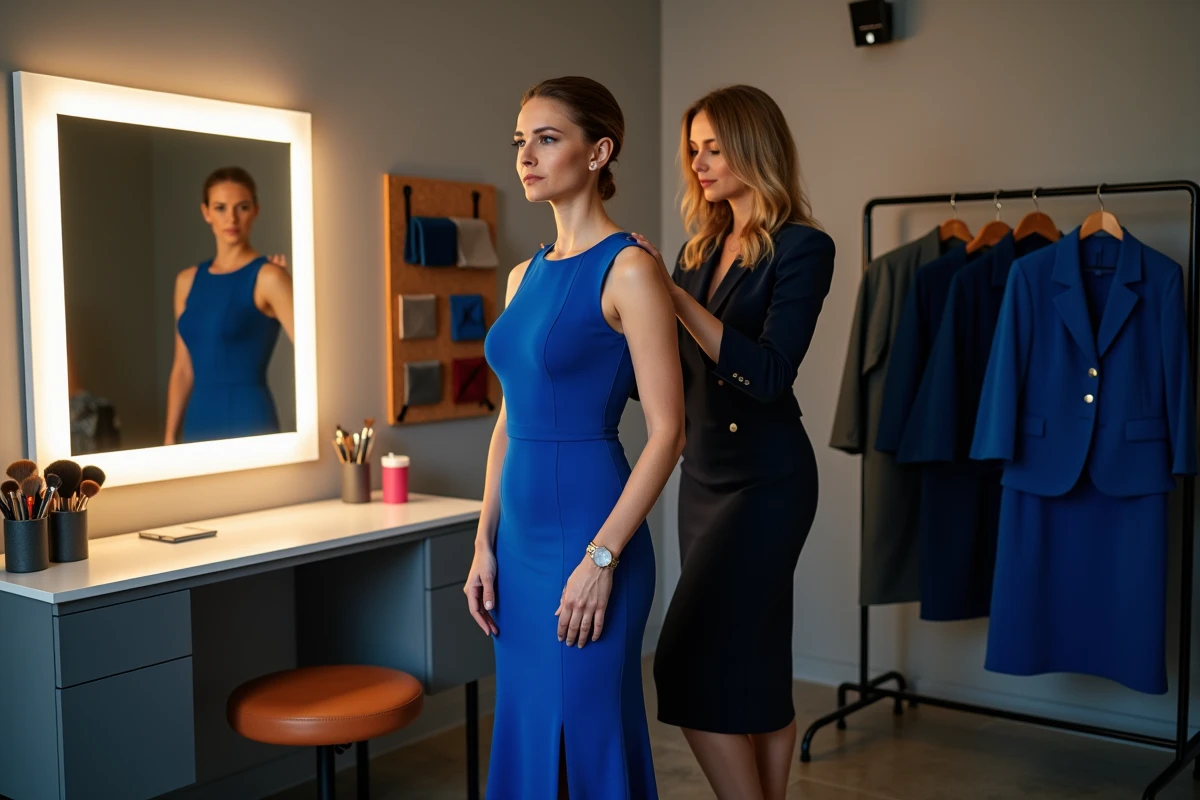
On the sets of France 2, each weather report lasts a few minutes. The choice of clothing worn on screen, however, involves a much longer process, shared between an internal image department dedicated to appearance, a common wardrobe, and technical constraints related to the virtual background.
Image Department of France Télévisions: The Role of In-House Stylists
The weather presenters of France 2 do not hire a personal stylist in the way that celebrities do. The France Télévisions group has structured an internal image department that oversees the appearance of on-air faces, including journalists and hosts.
This department works with salaried stylists or those attached to production. Their mission covers the choice of colors, cuts, and materials suitable for each show. The direct and individual use of external stylists or brands, which was once more common, has been gradually reduced in favor of this centralized operation.
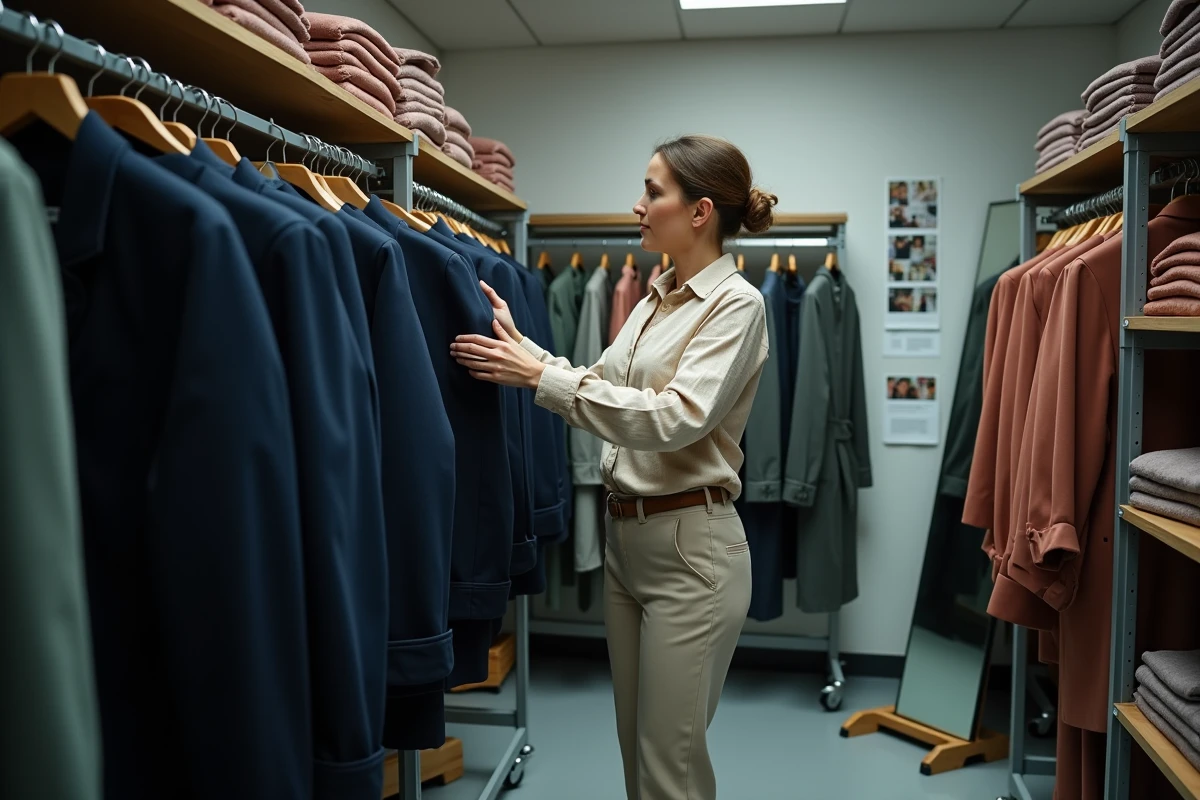
In practice, the presenters select from a common wardrobe provided by production, sometimes supplemented by a few personal pieces. Ready-to-wear brands remain present through loans and structured collaborations, mentioned in the credits when required by regulations. Understanding who dresses the weather presenters on France 2 therefore involves looking at this collective organization rather than a designated designer.
Technical Constraints of the Virtual Background on Weather Clothing Choices
The weather report uses a green (or blue) background replaced in real-time by animated maps. This chroma key technology imposes strict dress code rules that the image department integrates from the selection of outfits.
- Colors close to green or blue chroma are prohibited: a garment in this shade would render the body partially transparent on screen.
- Fine patterns (tight stripes, small checks) cause a moiré effect, a distracting flicker visible to the viewer. Stylists prefer solid colors or large patterns.
- Materials that are too shiny or reflective create light halos captured by HD cameras, disrupting the compositing on the virtual background.
- With the development of augmented reality on weather sets, clothing must also perform correctly in overlapping 3D environments, reinforcing the preference for matte and contrasting shades.
These constraints explain why on-air outfits often appear sober and uniform. The choice is not solely aesthetic; it is primarily functional.
Arcom Regulations and Transparency on On-Air Outfits
Arcom (formerly CSA) regulates covert advertising and product placement on public channels. This regulation has a direct impact on the clothing visible on screen during news and weather reports.
As a public group, France Télévisions must avoid any visible logos on outfits worn on air. Agreements with ready-to-wear brands are negotiated at the group level, not by the presenters themselves. When a partnership exists, it is noted in the credits to comply with transparency obligations.
This requirement pushes the common wardrobe towards neutral pieces, without visible branding. Weather presenters therefore rarely wear identifiable ready-to-wear clothing on screen, even if the garments come from well-known brands. The result on screen gives a polished appearance but is intentionally understated.
Évelyne Dhéliat and the Debate on Weather Presenters’ Outfits
The topic of clothing in weather reports has regularly surfaced in the media, particularly around Évelyne Dhéliat on TF1. The presenter has publicly responded to criticisms about her outfits, explaining that the heat of the studios and the context of climate change justified lighter clothing choices.
On France 2, the question arises differently. The operation of a common wardrobe, supervised by the image department, limits individual controversies. Clothing choices are a production decision, not a personal whim.
This debate reveals a common misunderstanding: viewers attribute the responsibility for their appearance to the presenters, while it results from a chain of decisions involving stylists, production management, technical constraints, and regulatory frameworks.
Differences Between Public and Private Channels
On private channels like TF1 or M6, presenters sometimes have a broader margin of maneuver. Some presenters work with identified brands or choose their own clothing more freely. In public service, the collective framework of the wardrobe and Arcom rules reduce this autonomy.
The difference is not always visible on screen, but it structures the daily lives of the teams behind the scenes. A weather report lasting a few minutes mobilizes, in advance, a clothing logistics designed to simultaneously meet the technical, regulatory, and editorial demands of the channel.
The clothing worn on air during the weather report on France 2 is the result of a compromise between the green screen, Arcom standards, and the visual identity of the group. The presenter who appears on screen is the last link in a chain where in-house stylists, production management, and legal framework have already made decisions before her.