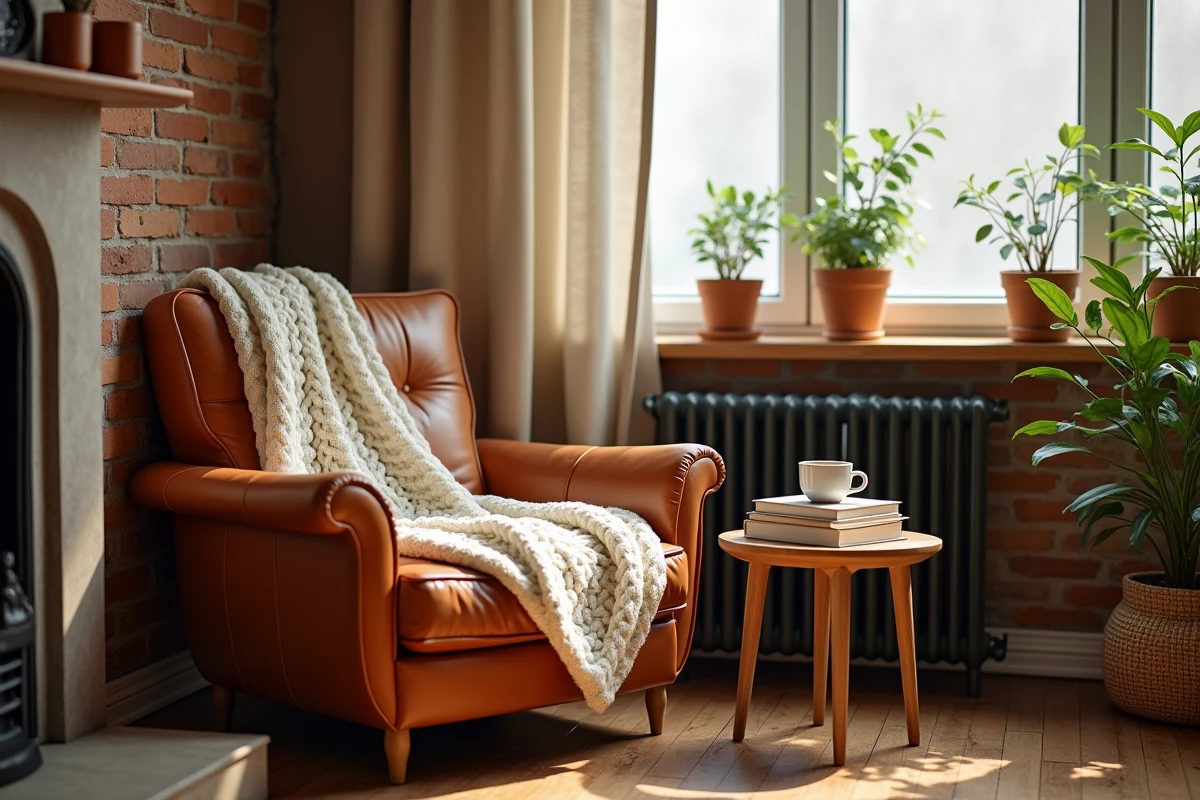
A warm interior does not rely on an accumulation of decorative objects. The result depends on measurable physical parameters: color temperature of light sources, acoustic absorption capacity of surfaces, and levels of volatile organic compound (VOC) emissions from the chosen materials. Transforming a space into a cocoon requires understanding these mechanisms before selecting any textile or wall color.
Color temperature and connected lighting for a cocoon atmosphere
The feeling of warmth in a room is primarily a matter of light. The color temperature, expressed in kelvins, determines whether lighting leans towards cool white (above 4,000 K) or enveloping orange (around 2,700 K). For a living room or bedroom, staying below 3,000 K creates that dim atmosphere the brain associates with rest.
Connected lighting systems have greatly simplified this adjustment. Ranges like Philips Hue or Ikea Dirigera offer preconfigured scenes that automatically adjust intensity and hue according to the time of day. In the evening, a “relaxation” scene lowers brightness and shifts to amber tones, which is enough to radically change the ambiance of a living room without touching the decor.
A often overlooked point: multiplying low light sources changes the atmosphere more than a single powerful ceiling light. Table lamps, warm white LED string lights, candles—all these sources placed below eye level envelop the space and reduce harsh shadows on the ceiling. This principle distinguishes a cozy interior from a simply well-lit room.
All these reflections on layout and decor align with the home advice from Le blog de Bango, where each room in the home is approached from the angle of concrete comfort.
Low VOC materials: decorating without degrading indoor air quality
Creating a warm cocoon loses all meaning if the materials used degrade the quality of the air breathed daily. VOC emission labeling, widespread on paints and coatings sold in France, classifies products from A+ (very low emissions) to C (high emissions). Since 2023-2024, the A or A+ rating has become nearly standard in consumer paint and wall covering ranges.
The Ademe and the Ministry of Ecological Transition explicitly recommend prioritizing low-emission materials for a comfortable interior. This logic extends well beyond paint:
- Textiles certified Oeko-Tex or GOTS guarantee the absence of harmful substances in curtains, cushions, and throws that make up the essence of a cozy decor.
- Reconstituted wood panels (MDF, particle board) used in furniture can emit formaldehyde for several months. Checking the emission class E1 or E0.5 before purchase avoids this trap.
- Scented candles, associated with the cocoon atmosphere, release fine particles and VOCs. Versions made from vegetable wax (soy, rapeseed) with cotton wicks emit fewer pollutants than paraffin candles.
This health criterion is not a constraint that limits aesthetic choices. The pollutant-absorbing paints offered by brands like Tollens combine trendy shades with the ability to capture certain ambient pollutants. Decorating and purifying become a single action.
Acoustic absorption: the invisible comfort of a cozy interior
A room can be beautifully decorated and still remain uncomfortable due to sound reverberation. Hard surfaces (tiles, polished concrete, large bay windows) reflect sound and create a resonance effect that becomes tiring over time. Reducing reverberation time transforms the perception of a space as much as the color of the walls.
Thick textiles play both a technical and aesthetic role here. A heavy curtain in front of a window, a long-pile rug under a coffee table, velvet cushions on a sofa: each of these elements absorbs a portion of sound waves and softens the overall ambiance of the room.
Since 2023, consumer brands like Leroy Merlin have offered decorative acoustic panels designed for the living room or bedroom. Available in felt, cork, or foam covered with fabric, these panels are mounted on the wall like paintings. They absorb mid and high frequencies, those of the voice and television, which contribute most to the sensation of noise in a home.
Combining a dense rug, opaque curtains, and one or two wall panels is enough to make a living room noticeably cozier. The comfort gain is felt within the first few minutes spent in the room.
Color palette for a warm interior: beyond beige
Warm shades are not limited to beige and taupe. Terracotta, yellow ochre, sage green, or walnut brown create a richer visual envelope while maintaining the enveloping effect sought.
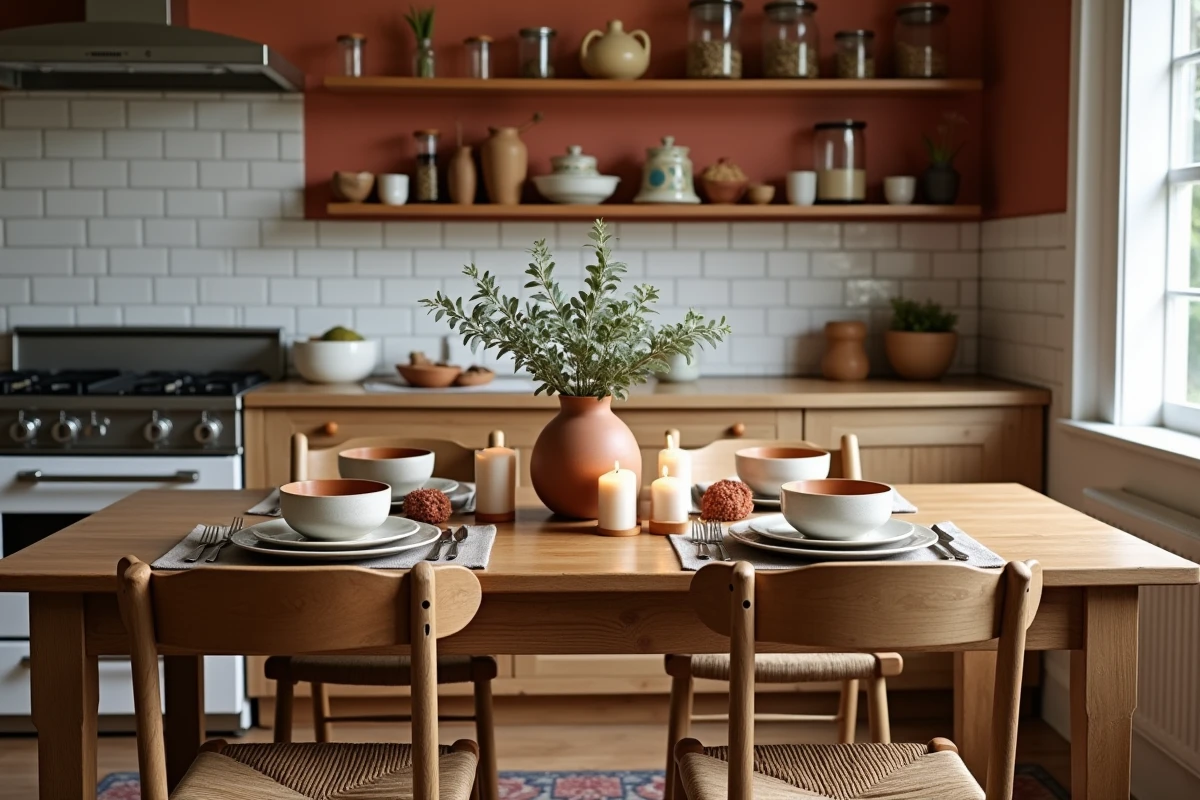
The technical principle to remember: a saturated color on a single wall is enough to anchor the atmosphere of a room. Painting all four walls in a strong shade visually shrinks the space. An accent wall in terracotta behind a sofa, combined with adjacent walls in off-white, adds depth without darkening the living room.
Wood plays a complementary role in this palette. Raw oak shelves, walnut table tops, beech photo frames: these elements bring natural tone variations that no paint can replicate exactly. Wood also adds a tactile texture that enhances the sensory dimension of the cocoon.
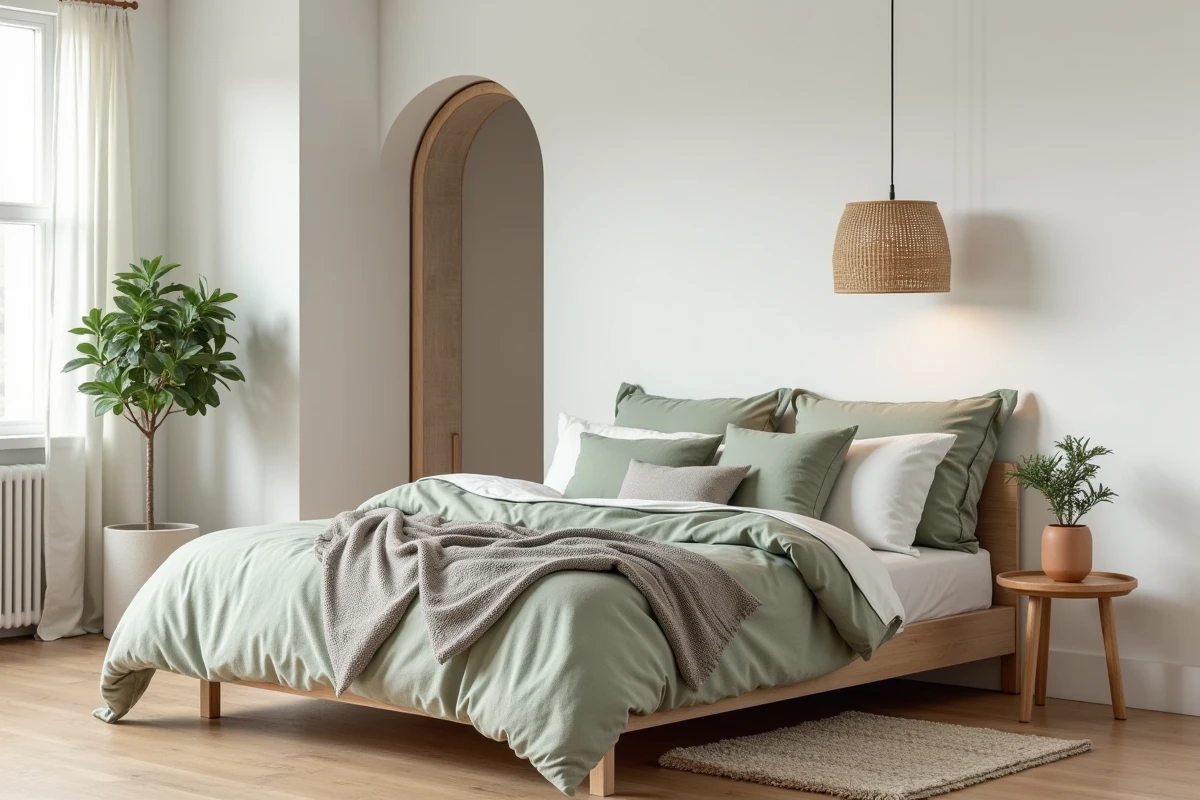
For the bedroom, desaturated shades work better. A very pale olive green or powder pink on the headboard wall, paired with washed linen bedding, creates a calming ambiance without resorting to complicated decor solutions.
The choice of finish matters as much as the shade. A matte paint absorbs light and softens wall imperfections, while a satin finish reflects more and is better suited for dark rooms lacking natural light. Checking the VOC emission label remains relevant here: the majority of consumer matte paints now display the A+ class.
Transforming an interior into a warm cocoon relies on precise technical choices rather than decorative accumulation. Lighting below 3,000 K, low-emission materials, worked acoustic absorption, and a controlled color palette work together. Each parameter taken in isolation improves comfort, but it is their combination that produces the enveloping sensation that the word “cocoon” truly denotes.