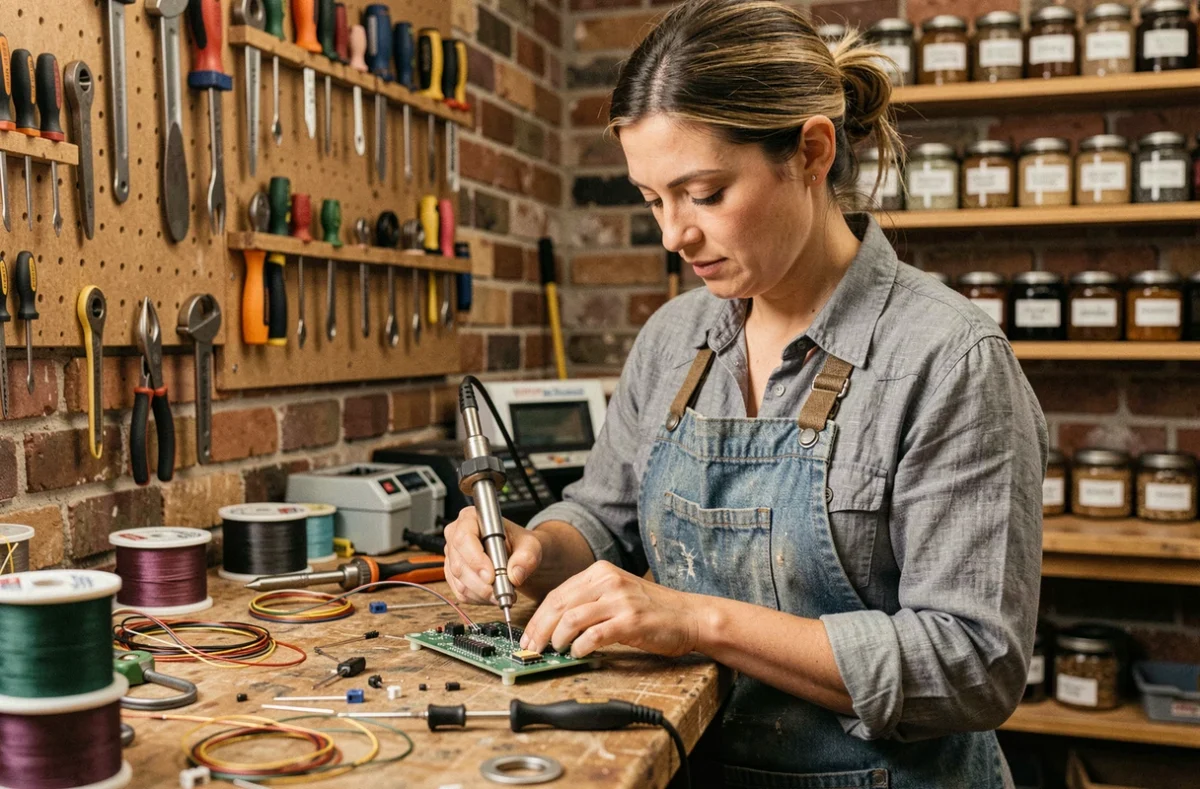
A toaster that only heats halfway, a wobbly shelf, a garment torn at the seam: we often find ourselves wondering whether to throw it away, call in a professional or try to fix it ourselves.
The choice depends on very practical factors, from the cost of spare parts to the safety of the repair and access to a properly equipped workshop. Making, repairing and creating things yourself is one of the most direct ways to develop lasting technical skills—as long as you know when to give it a go and when to call in an expert.
DIY repairs or hiring a professional: practical criteria for deciding
We all have a drawer full of cables and a device that “almost worked.” Before taking anything apart, ask yourself three questions to narrow down your options.
The first is about safety. Mains-powered electrical appliances (ovens, washing machines, heaters) pose a risk of electric shock. Without basic training and a multimeter, having a repair technician handle the job is the only sensible option. By contrast, replacing a phone battery, sewing up a bag or gluing a chair leg back on poses no particular danger.
The second question is whether you can get hold of the parts. In France, repair bonus schemes generally cover work carried out by a registered or certified repairer, not the cost of parts for a DIY repair. If the part is available online and the repair process is documented (in a video tutorial or manufacturer’s instructions), you can try fixing it yourself. Otherwise, professionals have access to supply channels that aren’t open to the general public.
The third question is cost. If a replacement heating element for an iron costs half as much as a new one, repairing it may not be worthwhile, whether you do it yourself or hire a professional. You can find resources and shared fabrication networks at https://www.make-world.org, which also documents projects where learning together makes the time worthwhile, even when the numbers are tight.
Community workshops and digital fabrication: learn by making things together
DIY projects often run into the same obstacle: tools. A drill press, 3D printer or laser cutter is expensive and takes up space. Publicly accessible digital fabrication spaces, sometimes hosted in libraries or community-run third places, offer a solution.
The Do It With Others (DIWO) approach replaces the lone tinkerer with a group that shares tools and skills. You can learn to solder an electronic component, design a 3D replacement part or sew a pattern, with guidance from more experienced peers. The result is more than just a finished object: you leave with a skill you can use elsewhere.
Some libraries, such as those in the Montpellier Méditerranée Métropole network, have “fab labs” where the public can use prototyping equipment. This model makes digital fabrication accessible without an expensive subscription or a long-term commitment.
When a shared workshop is a better choice than the garage
Three situations clearly point to a community workshop rather than working at home:
- The project requires a specific machine (a CNC cutter, heat press or TIG welder) that you’ll only use once or twice a year.
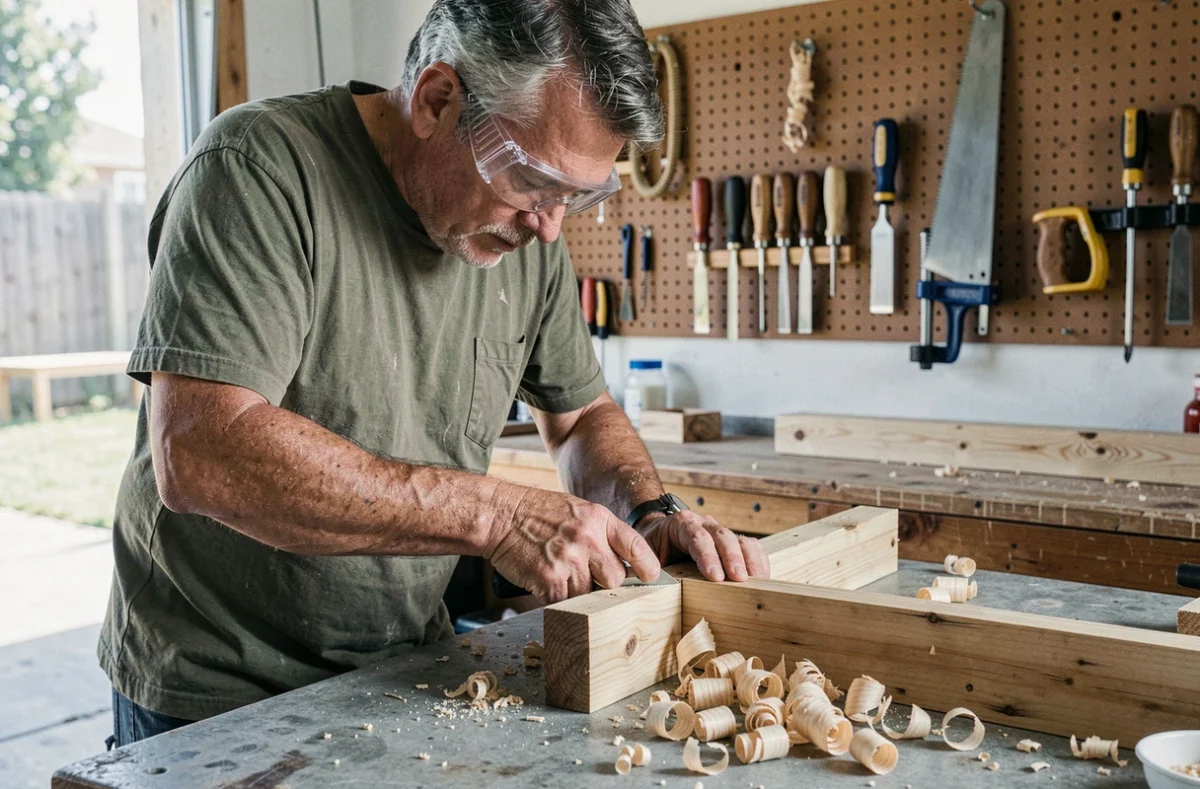
- You’re new to a technique and need an experienced eye to help you avoid safety mistakes, especially when working with wood or metal.
- The part you need to make requires a digital file (a 3D model or vector pattern) and you’re not yet familiar with the software.
In these situations, a session at a shared workshop costs less than buying a tool that will sit in storage without paying for itself.
The right to repair in Europe: what’s changing for DIY enthusiasts
The European right-to-repair directive, adopted in 2024, requires repairs for certain product categories and provides for national measures to promote repair. For DIY enthusiasts, this means broader access to spare parts and technical documentation—at least on paper.
How this works in practice depends on how each country implements the directive. In France, the rules for consumers who repair products themselves may vary depending on how far implementation has progressed. Checking that spare parts are officially available before ordering from a third-party website can help avoid unpleasant surprises (incompatible parts or a voided warranty).

What the directive doesn’t cover
The directive mainly targets household appliances and consumer electronics. Furniture, clothing and decorative items are outside its scope. For these categories, personal skills or a shared workshop remain the only options for tackling obsolescence.
Educational DIY projects with children: activities that teach practical skills
Making things with children doesn’t have to mean sticking on stickers. The most educational projects are those that teach a practical skill they can use again.
- Building a simple circuit with a battery, switch and LED teaches the basics of electricity safely (at less than 9 V).
- Sewing a small pouch from reclaimed fabric introduces children to the sewing machine or, if that’s not available, the backstitch by hand—a technique they can use for all kinds of mending.
- Putting together a shelf from wooden battens with screws and a screwdriver introduces drilling, screwing and the concept of keeping corners square.
- Repairing a broken toy (a truck wheel or an action figure’s arm) teaches structural bonding and how to choose the right glue for each material.
Every successful project teaches children to check what’s broken before throwing something away. Once ingrained, this habit applies far beyond school craft projects.
Reclaimed materials or a store-bought kit
Toilet paper rolls and corks can only take you so far. A structured kit (for electronics, woodworking or sewing) comes with precisely sized parts and instructions, reducing frustration during those first attempts. Once the skill is mastered, you can move on to reclaimed materials.
Learning by doing starts with choosing the right setting for each project: work alone at home when the task is simple and safe, use a shared workshop when you lack the tools or skills, and call in a professional when safety or warranty requirements demand it. The rest comes down to practice.